Secondary Analytics isn’t for everyone, but you may be considering it for many reasons. Let’s break down what it is, who needs it, and why.
In the first three parts of this series, we explored the building blocks of modern measurement:
- Server-side tracking for stable, future-ready data collection
- Consent Management Platforms (CMPs) for compliance and trust
- First-party data activation to unlock value from the data you own
But even with these in place, many businesses face a critical question: how do we measure outcomes confidently when data gaps remain?
That’s where Secondary Analytics comes in.
What Is Secondary Analytics?
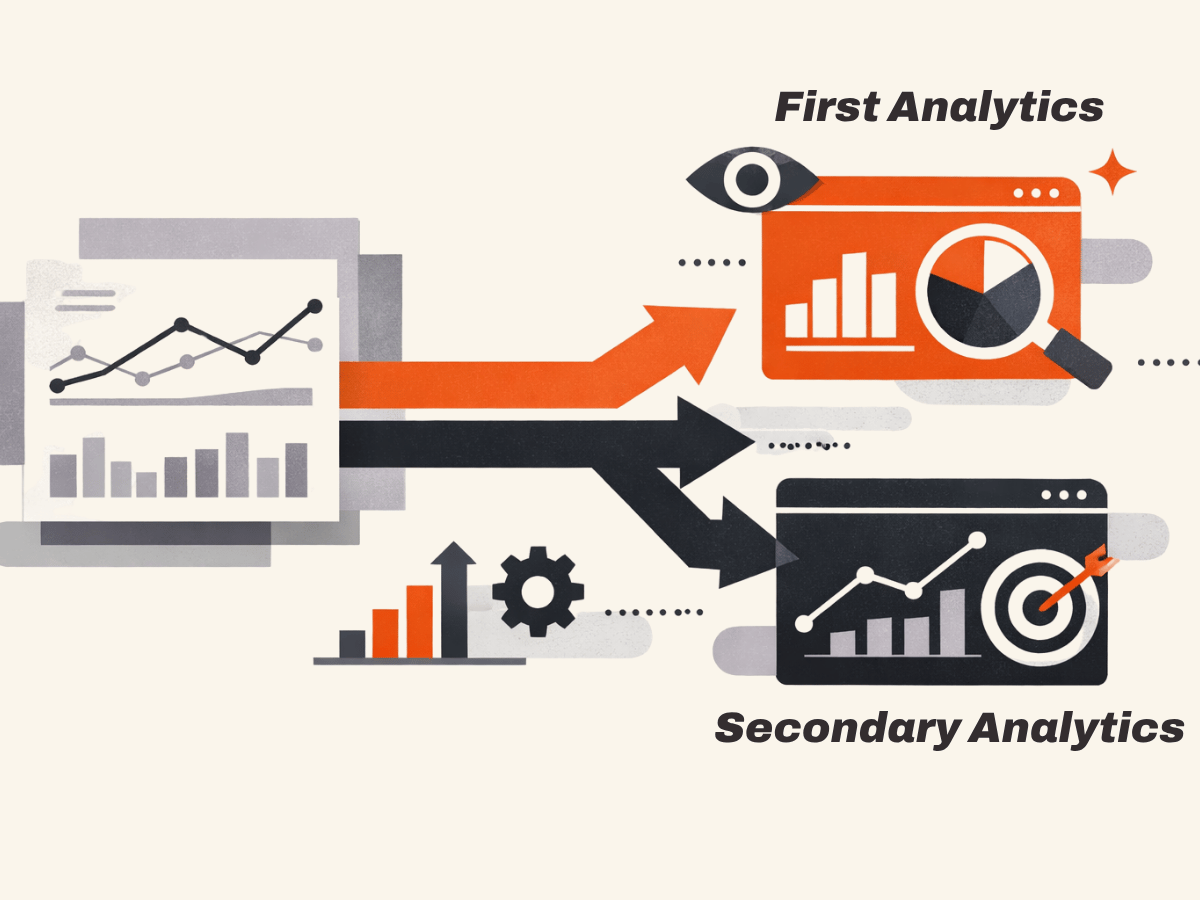
Secondary analytics is an additional measurement layer that runs in parallel with your primary analytics setup (usually GA4).
It doesn’t replace GA4. Instead, it provides a privacy-friendly, independent dataset that complements and validates what GA4 reports.
Examples of secondary analytics tools include:
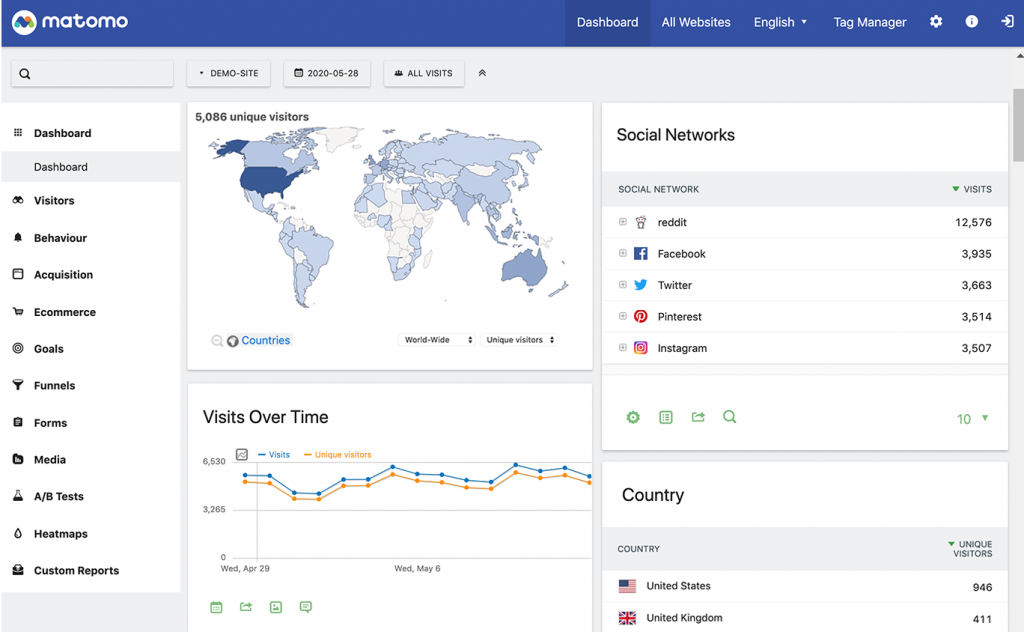
- Matomo: a popular open-source platform that can be cloud-hosted or self-hosted for full data ownership
- Log-based analytics: analysing server logs for traffic and conversions
- Custom BI solutions: combining first-party data with tracking feeds for verification
Think of GA4 as your main dashboard, and secondary analytics as the second opinion, giving you independence, compliance, and resilience.
Why Add Secondary Analytics If GA4 Is Free?
Most businesses rightly ask: why pay for another tool when GA4 Standard is free and powerful?
The answer: secondary analytics isn’t about replacing GA4, it’s about solving what GA4 alone can’t.
1. Independent Validation
- GA4 and ad platforms both come from Google. If you’re spending $50k+ a month, you don’t want reporting from just one ecosystem.
- Secondary analytics acts as an independent referee, validating conversions and budget efficiency.
2. Compliance & Data Sovereignty
- GA4 data is stored in Google’s cloud. That’s fine for most, but for organisations with stricter data sovereignty requirements, more control over where data lives and how it’s managed is often a necessity.
- Matomo can be self-hosted or hosted regionally, giving you full control over where your data lives, who can access it, and how long it’s retained, independent of any third-party platform.
3. Resilience Against Change
- GA4 (and Google Ads): GA4 follows Consent Mode. If a user doesn’t give consent, GA4 won’t collect their detailed events. Instead, it uses Behavioural Modeling, a machine learning feature that estimates the behaviour of users who decline consent, based on consenting users. This modelling only activates when specific traffic thresholds are met, and is not available for all properties. You don’t see the actual interactions; you see an estimate.
- Matomo: For most businesses, Matomo operates on the same principle as GA4: user consent is required to track. What sets it apart is full transparency and control, you decide exactly what’s collected, where it’s stored, and for how long, with no dependency on Google’s infrastructure or modelling methodology. When users consent, you get directly observed data with no modelling layer applied.
This means if your consent rate is 60%, both tools will measure that same 60% directly. GA4 then estimates the remaining 40% through Behavioral Modeling (subject to eligibility thresholds); Matomo reports only what it directly observed, two complementary perspectives on the same reality.
For regulated industries: There is a specific Matomo configuration, recognised by regulators such as France’s CNIL, that allows limited, anonymised data collection without a consent banner. This requires strict anonymisation constraints and careful implementation. It’s not a general-purpose feature, but for organisations in heavily regulated sectors where even partial baseline measurement matters, it’s worth exploring with your analytics and legal teams.
4. Stakeholder Transparency
- Boards, compliance teams, and regulators often prefer a neutral dataset they can audit independently.
- Matomo provides full visibility into your data collection configuration, what’s collected, where it lives, and how it’s processed, making it a dataset you can defend confidently in audits, without relying on a third party’s methodology.
GA4 360 vs Matomo: When to Choose Each
A common question: why not just upgrade to GA4 360 instead of adding Matomo?
GA4 360
- Strengths: enterprise quotas, no sampling, advanced integrations (Ads, DV360, SA360, Salesforce), SLA-backed support.
- Best for: companies spending millions annually in Google Ads, operating primarily inside the Google stack.
- Limitations: data still lives in Google’s ecosystem, it doesn’t solve sovereignty or independence.
Important note: Even with GA4 360, consent rules still apply. If a user denies consent, GA4 cannot collect their detailed event data. Behavioral Modeling can fill some gaps, but it only activates when specific traffic thresholds are met and isn’t available for all properties. GA4 360 doesn’t bypass privacy constraints, it scales your data processing and integration capabilities within those constraints.
Matomo
- Strengths: full data ownership (self-host or regional), complete transparency over data collection and storage, directly observed data for consented users with no modelling layer applied, lower cost.
- Best for: companies needing compliance guarantees, independence from ad platforms, or a second neutral dataset.
Many enterprises use both: GA4 (or GA360) for ecosystem optimisation, Matomo for sovereignty and verification.
Who Benefits From Secondary Analytics?
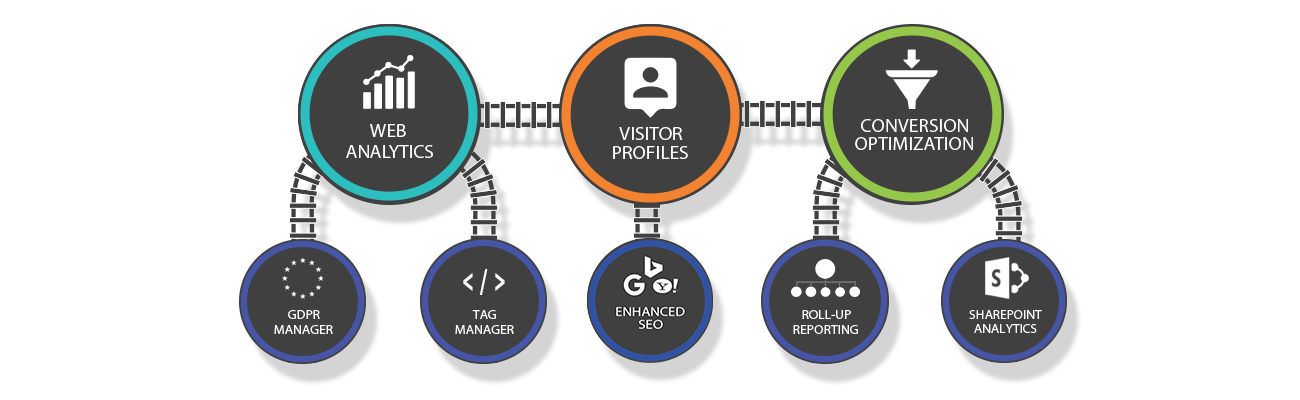
List of Features in Matomo Analytics – Analytics Platform – Matomo
Not every business needs it. Here’s the rule of thumb:
- Small businesses: GA4 is enough.
- Growing SMEs: GA4 + CMP + server-side usually suffices. Secondary analytics adds value if operating across multiple regions or in regulated industries.
- Enterprises / High-Spend Advertisers: secondary analytics quickly pays off, even a 5% discrepancy can mean tens of thousands in misattribution.
- Privacy-Sensitive Verticals: where data must stay within specific borders or infrastructure, and compliance teams need full auditability of what’s collected, where it lives, and how long it’s retained.
Real-World Applications
| Use case | Business problem | What GA4 does | What Matomo adds | Outcome |
|---|---|---|---|---|
| E-commerce Protecting ad spend & true ROI |
Google Ads, GA4, and backend all report different conversion numbers. Which do you trust? | Solid attribution but dependent on consent and modelling, numbers reflect an estimate, not direct observation. | Server-side tracking of consented conversion events directly from the platform, full visibility into how events are defined, stored, and attributed. | Identify discrepancy source; reallocate budget with confidence. |
| SaaS Audit-ready data for compliance |
Auditors require proof that PII is never stored outside the country. GA4 processes data in Google’s infrastructure. | Acquisition and funnel analysis, but data lives on Google’s servers, outside direct organisational control. | Self-hosted in-country: fully owned, fully auditable dataset with complete control over retention, access, and configuration. | Marketing uses GA4 to optimise; compliance uses Matomo to satisfy regulators. |
| Global campaigns Navigating different privacy regimes |
In markets like Germany, consent rates hover around 60% — GA4 data is incomplete for those users. | Models missing conversions via Behavioral Modeling for Ads activation, subject to traffic thresholds required for the model to activate. | Independent, sovereign view of the same consented traffic, ownership and auditability without relying on Google’s modelling or ecosystem. | Regional teams get transparent data; global HQ uses GA4 for cross-channel optimisation. |
Challenges to Be Aware Of
Integration Complexity
Secondary analytics isn’t a plug-and-play solution. It requires:
- Setting up server-side GTM to capture clean data streams.
- Aligning with your Consent Management Platform so Matomo respects user choices.
- Configuring e-commerce or SaaS backends to send events into both GA4 and Matomo.
Without careful planning, you risk fragmented data instead of clarity.
Dual Reporting and Expectation Management
GA4 and Matomo will never show the exact same numbers. Why?
- Different attribution models (last click vs multi-touch).
- GA4 always attempts Behavioral Modeling for non-consenting users, but the model only activates when specific traffic thresholds are met, meaning smaller properties may see no modelling at all. Matomo reports only directly observed, consented data with no modelling layer applied.
- Differences in how each platform processes and stores events.
This is by design; the point isn’t to match numbers but to get two complementary perspectives. Teams need training to interpret both datasets correctly.
Clear Objectives Are Essential
Secondary analytics should serve a defined role: compliance reporting, ad spend validation, or an independent data perspective.
- If introduced without purpose, it risks confusing stakeholders (“Which number is right?”).
- With clear alignment, GA4 stays your primary dashboard, while Matomo provides specific assurance (compliance, independence, verification).
Our Approach
At In Marketing We Trust, we build secondary analytics systems that work with GA4, not against it.
- GA4 (or GA360) is your primary dashboard.
- Matomo is your validation and compliance layer.
- We integrate Matomo with server-side GTM, CMPs, and first-party pipelines.
- We provide reporting frameworks so teams can compare GA4 and Matomo side by side.
This ensures:
- Marketing gets actionable insights
- Compliance gets data sovereignty and proof of consent
- Leadership gets confidence in validated numbers
Final Thoughts
GA4 free or 360 is the backbone of modern analytics. But no single system answers every business question.
Secondary analytics with Matomo provides:
- Independence from ad platforms
- Stronger compliance through full data ownership and transparency
- A trustworthy second perspective on your consented data, free from third-party modelling
It’s not about replacing GA4. It’s about combining tools to build a resilient, privacy-first measurement ecosystem.
And this ecosystem doesn’t stop at tracking. The next step is to bring all of these data streams: GA4, Matomo, ad platforms, CRM, and first-party data, into a centralised Marketing Data Warehouse. That’s where you get the complete, cross-channel visibility needed for confident decision-making at scale.