Every marketing platform tells its own version of the truth. Google Ads reports one set of conversions, Meta claims another, and your CRM quietly disagrees with both. Meanwhile, your team loses hours every week stitching exports together in spreadsheets that are stale before anyone reads them.
Marketing shouldn’t be guesswork, yet fragmented data forces exactly that: decisions made late, on incomplete information, by teams debating whose numbers are right.
This article, the final piece in our measurement series, makes the case for the layer that brings it all together: the marketing data warehouse. We’ll cover what a warehouse actually does (one consistent, auditable source of truth built on your business logic, not a platform’s), what it unlocks beyond reporting (predictive forecasting, machine learning attribution, AI agents and data activation), and a practical way to work out whether it’s the right investment for your business now.
If you’ve ever delayed a decision because you couldn’t trust the numbers in front of you, keep reading.
Disappearing data: The series
Throughout this series, we’ve built the foundation for a more resilient, privacy-conscious marketing measurement system:
- Consent Management Platforms (CMP) help ensure data is collected legally and transparently.
- Server-side tracking improves reliability by reducing browser-based data loss and gives you greater control over how data is collected and processed.
- First-party data activation enables smarter targeting and retention using information you already own.
- Secondary analytics provide an independent point of reference for cross-checking trends and ensuring measurement consistency.
Yet even with all of these pieces in place, most marketing leaders still face a familiar challenge: fragmented visibility.
Google Ads says one thing. Meta says another. CRM and finance data tell different stories.
That’s where a Marketing Data Warehouse becomes essential, not to “change everything,” but to bring your disconnected data into one consistent, verifiable view.
The problem: fragmented data, fragmented decisions
Industry research puts the average time lost to manual data collection and reconciliation at between 6 and 14 hours per week, before any analysis even begins. That is not just an operational cost. It is decisions made late, on incomplete information, by teams debating whose numbers are right instead of agreeing on what to do next.
A marketing data warehouse solves this by creating one consistent, auditable source of truth built on your business logic, not a platform’s.
What a marketing data warehouse does
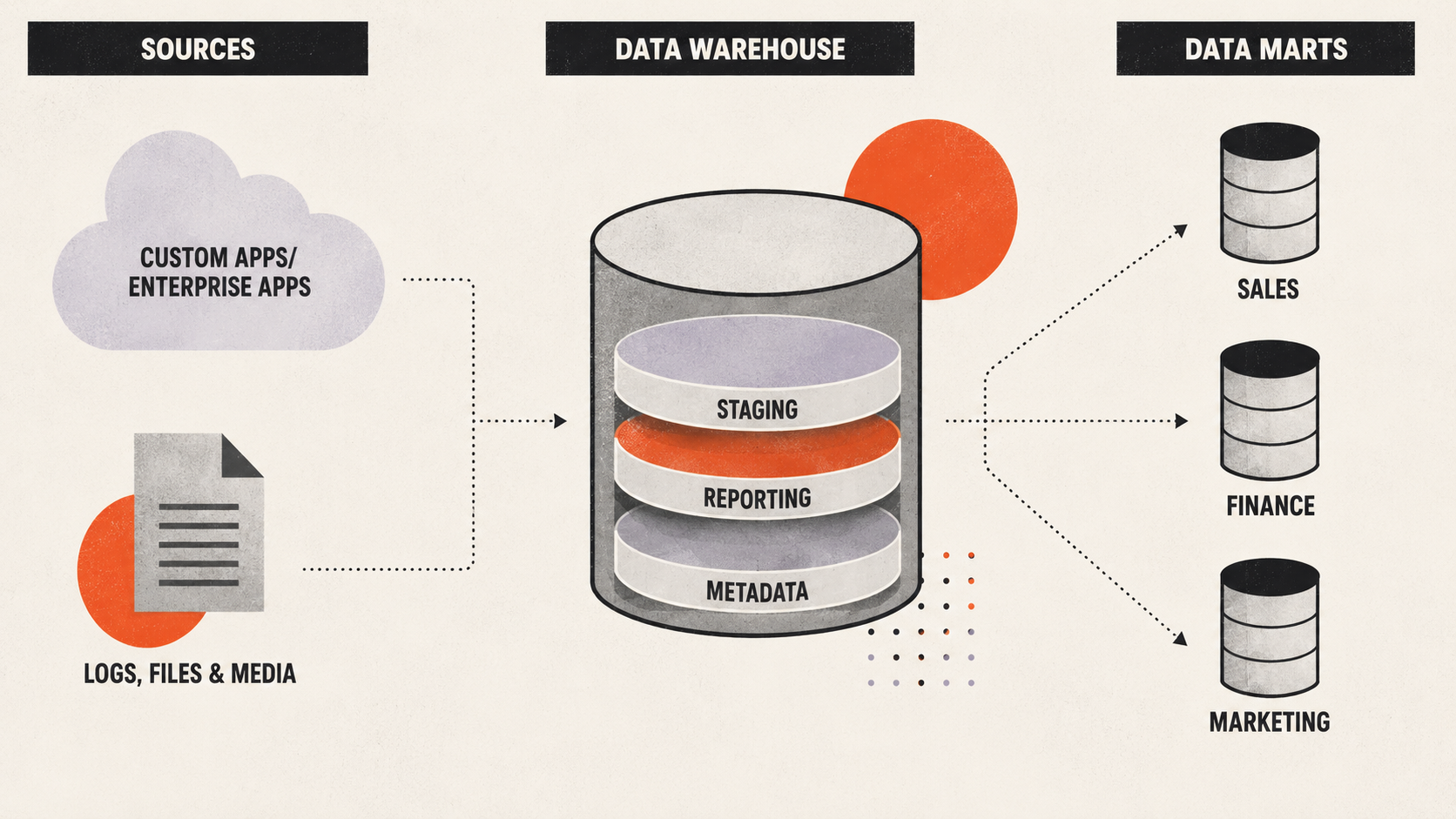
A data warehouse pulls your marketing, sales, and customer data into one place:
- Ad spend and performance across all channels
- Website traffic and conversions
- CRM and lead data
- Revenue from your sales systems
Once connected, pipelines refresh automatically. Manual exports become the exception, not the routine.
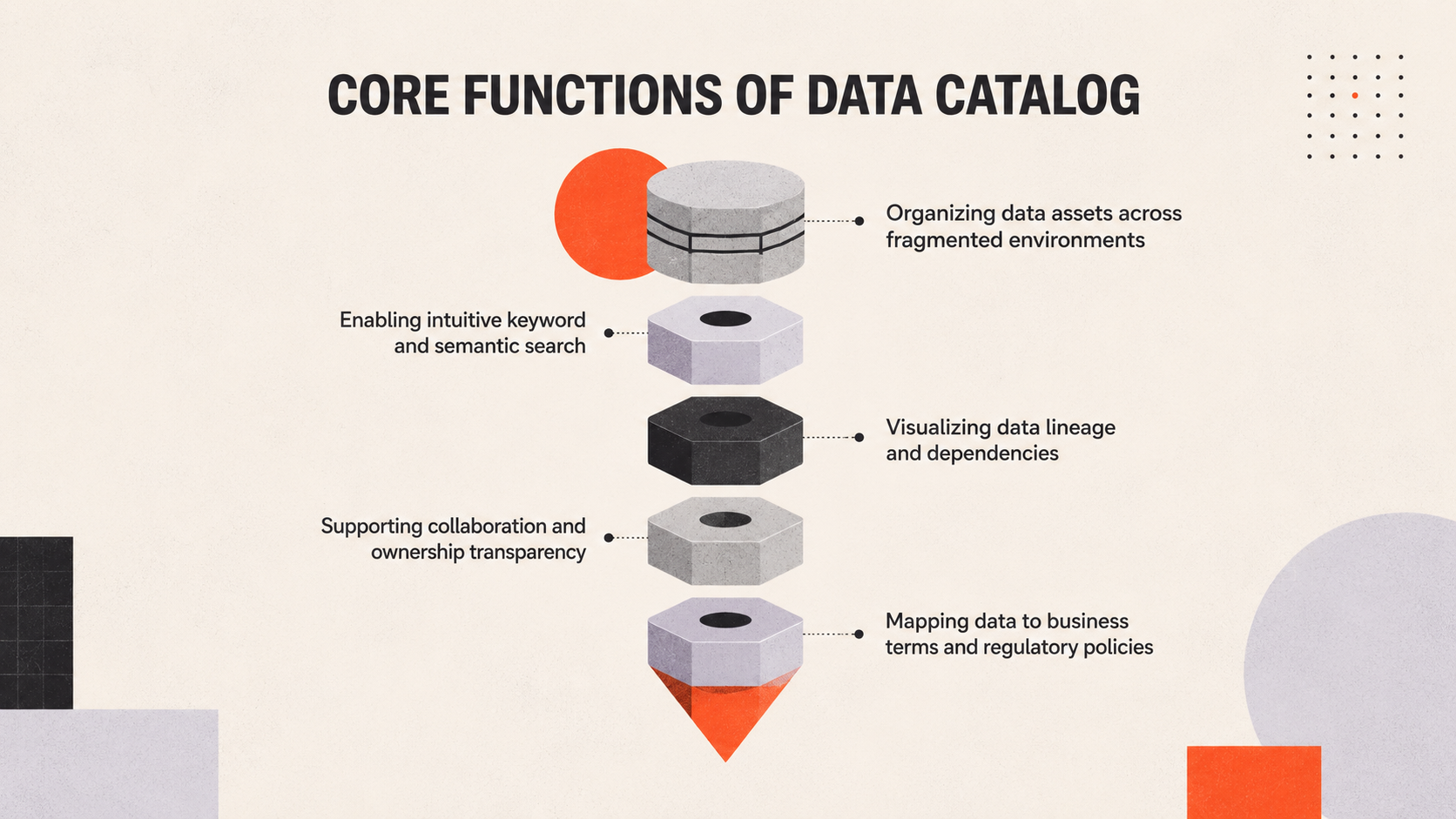
More importantly, the warehouse enforces a data catalogue: a shared dictionary of what every metric actually means in your business.
- A “conversion” is a confirmed sale in your CRM, not whatever Google or Meta decides to count
- A “lead” meets your qualification criteria, not just a form fill
- A “session” is defined by your analytics tool, not an ad platform impression
Everyone in marketing, sales, and finance works from the same definitions.
Before: Sarah, your marketing lead, spends her Monday reconciling five platforms into one spreadsheet. By the time it is done, it is already stale, and leadership questions the numbers.
After: One dashboard, updated overnight. Sarah spots that customers acquired through Meta have significantly lower 12-month lifetime value than those from Google Search, despite similar CPAs in each platform’s own reporting. She spends Monday making the case to reallocate budget, not building the spreadsheet.
The power of a marketing data warehouse: beyond reporting
Consolidating and reporting data is just the entry point.
The real value of a mature marketing data warehouse is what it unlocks next.
Predictive forecasting
Clean historical data across channels, spend, and revenue makes it possible to build models that go beyond reporting what happened and start projecting what is likely to happen. For example:
- Which campaigns are trending toward underperformance before the month ends?
- If you increase spend on a given channel by 20%, what does the model suggest your return will be, based on actual historical patterns rather than platform estimates?
Forecasting turns your warehouse from a rear-view mirror into a planning tool.
Machine learning and attribution modelling
Last-click attribution is increasingly unreliable. Yet most teams have not replaced it with anything better, largely because doing so requires clean, unified data across the full customer journey.
A marketing data warehouse makes this possible. With the full path from first touchpoint to closed sale, you can:
- Apply machine learning models that distribute credit more accurately across channels
- Give proper weight to top-of-funnel awareness activity that never gets credit in platform dashboards
- Quantify the real impact of a brand awareness campaign on eventual revenue, weeks or months later
McKinsey research found that companies in the top quartile of analytics performance are 20 times more likely to acquire customers and more than five times more likely to retain them.
AI agents and automated decisioning
AI agents sitting on top of a well-structured data warehouse can monitor performance continuously, flagging anomalies, identifying opportunities, and in some cases triggering actions automatically.
An agent might detect that your cost per acquisition on a specific segment has risen sharply over the past seven days, cross-reference it against creative fatigue signals and seasonal benchmarks, and surface a recommendation before your weekly review even happens.
Some teams are already using agents to:
- Automate bid adjustments
- Pause underperforming campaigns
- Trigger CRM workflows based on revenue signals rather than marketing metrics alone
Data activation
The warehouse is not just for analysis. It is for action.
First-party data stored and modelled in your warehouse can be pushed back out to your ad platforms as:
- Custom audiences
- Suppression lists
- Lookalike seeds
Your CRM data informs your targeting. Your campaign performance feeds back into your models. Your highest-value customer profiles become the blueprint for acquisition. It is a flywheel that gets smarter over time, and it is only possible when your data is unified and clean at the foundation.
Is a marketing data warehouse right for me?
A simple way to think about it: add up what poor data is already costing you.
- How many hours per week does your team spend on manual reporting? Multiply that by their hourly cost.
- How much of your ad spend could be misallocated due to unreliable attribution? Even a small percentage across a large budget adds up fast.
- How often do you delay or second-guess decisions because you cannot trust the numbers in front of you?
If those costs, in time, wasted spend, and missed opportunities, are starting to outweigh the investment in better infrastructure, that is your signal.
If you are running a small number of campaigns with a straightforward setup, simpler tools and tighter processes may serve you well for now. The warehouse becomes the right move when your data complexity has grown beyond what spreadsheets and platform dashboards can reliably handle.
Marketing data warehouses: the big picture
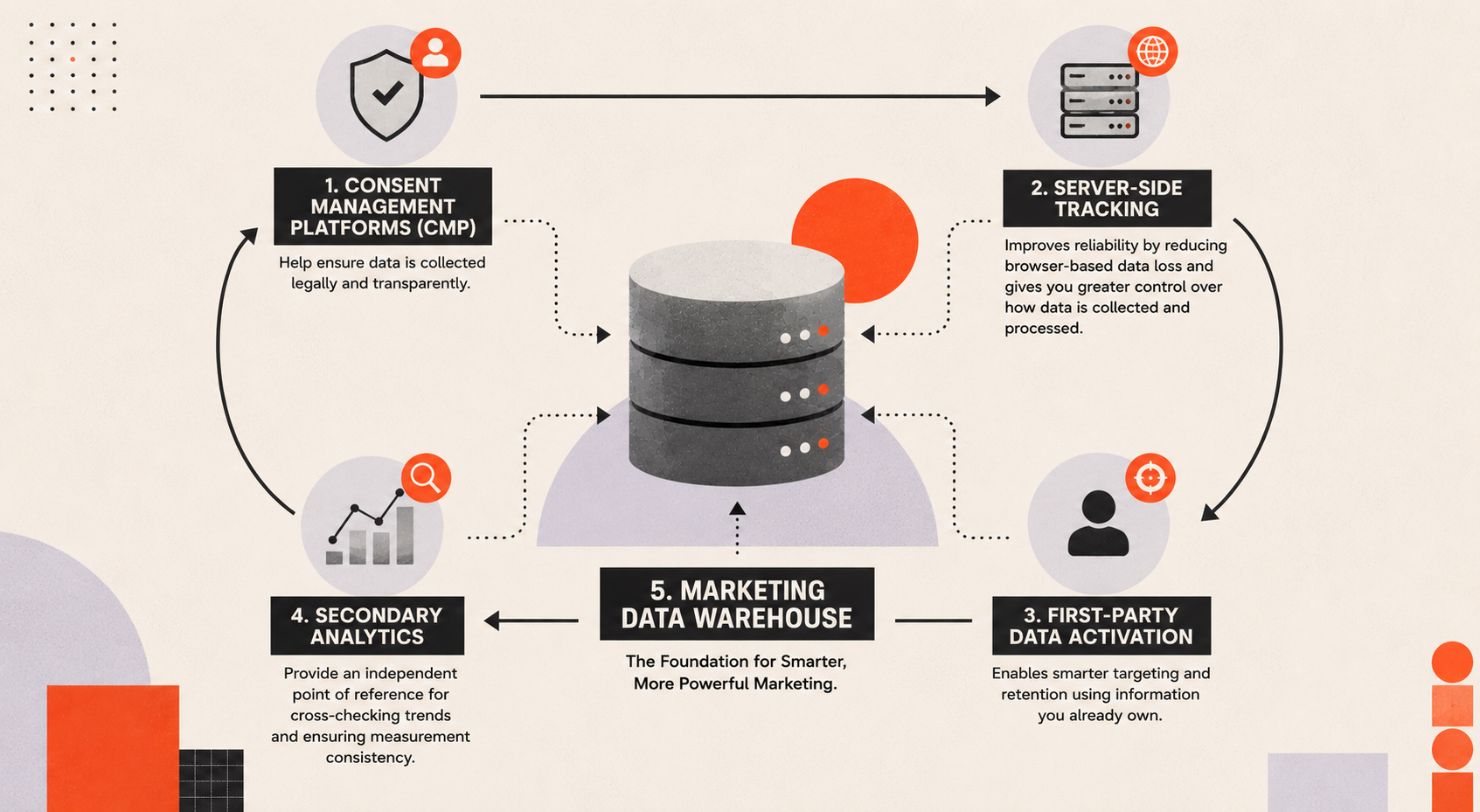
A marketing data warehouse is where your entire measurement stack converges: consent, accuracy, owned data, and validated measurement, all brought together into something your business can actually act on.
But it is also the foundation for what comes next: forecasting, AI-driven decisioning, and data activation that turns insights into growth automatically.
The question is not whether your marketing generates data. It is whether your data is working as hard as your marketing.
Stop reconciling. Start deciding.
Everything in this series has been building towards this point. Consent management makes your data legal. Server-side tracking makes it reliable. First-party activation makes it useful. Secondary analytics makes it verifiable. The marketing data warehouse is where those foundations converge into a single, consistent view your whole business can act on.
The teams that get this right stop arguing about whose numbers are correct and start compounding an advantage: cleaner data feeding better models, better models feeding smarter decisions, smarter decisions feeding growth. The teams that don’t will keep spending Monday mornings building spreadsheets.
If your data complexity has outgrown platform dashboards, or you suspect misallocated spend is quietly costing more than better infrastructure would, we should talk. We’ll diagnose where your measurement system is constrained before we prescribe anything, and we’ll tell you honestly if a warehouse isn’t the right move yet.
Get in touch to talk through what a marketing data warehouse would look like for your business.